
Finding Oregon City Resident Records
Oregon City has no single official roll of everyone who lives here. The useful route depends on the question. A parcel map can identify the physical property and its taxlot. Assessment & Taxation is the separate route for releasable owner and tax information. A recorded instrument identifies parties to a dated land transaction, while a permit can put documented work at an address. None of those records automatically establishes a present household.
For a name-led question, keep the record role straight. A court file can tie a party to a case, an archive index can point to a historical event, and an Oregon City Library volume can supply a dated local reference. Compare at least two independent anchors, such as a date plus a legal description, or an archive entry plus a newspaper notice. That is safer than treating matching surnames as one person.
- Enter the address in CMap and save the parcel, taxlot, jurisdiction, and map context.
- Ask Assessment & Taxation about the releasable owner-information route when that is the narrow question.
- Use the legal description and date to research a particular instrument with the Recording Division.
- For an older household, check the library's dated newspapers, census film, cataloged telephone leads, and archival indexes.
- When a known city or county record is not online, make a focused request to its actual custodian.
Note: A record can identify an owner, party, or historical contact without proving who currently occupies an Oregon City address.
Oregon City Resident Records Offices
Three nearby offices make the core Oregon City resident records trail workable, but each serves a different purpose. The County Clerk's Recording Division keeps property instruments and marriage records, not current state court files. Assessment & Taxation routes property and tax questions after a parcel is identified. Elections staff handle local election administration, while Oregon My Vote is designed for a voter checking that voter's own status. The fuller by-address sequence belongs on the Oregon City street directory page.
Clackamas County Clerk, Recording Division
1710 Red Soils Court, Suite 110
Oregon City, OR 97045
503-655-8551
Clackamas Assessment & Taxation
150 Beavercreek Road
Oregon City, OR 97045
503-655-8671
Clackamas County Elections
Local election and voter-file routing
Clackamas County, Oregon
Use the official office route
Map Oregon City Addresses First
CMap is the best first screen for an Oregon City address because it normalizes an address and places it in county geography. Its documented search choices are Address, City, Parcel Number, Street Intersection, and Taxlot Number. The parcel-number example uses eight digits with leading zeroes, while taxlot searches use the map-number and lot-number pattern without display dashes. An intersection can be entered as two street names joined by an ampersand.
| CMap field | How it helps |
|---|---|
| Address | Autocomplete locates a specific property and its map context. |
| City | Separates a municipal place query from a similar postal name. |
| Parcel Number | Uses an eight-digit number where leading zeroes matter. |
| Street Intersection | Finds a cross-street area after jurisdiction is refined. |
| Taxlot Number | Connects map number and lot number to recorded-land research. |
The Measure 50 Tax History tool is more limited. It accepts an address or account number for public value history. Move from its address result to the parcel and custodian process rather than assuming a name search is available.
The county tax-history search is shown below. Its two inputs demonstrate why an Oregon City address or account number is a stronger starting point than a broad household-name search.
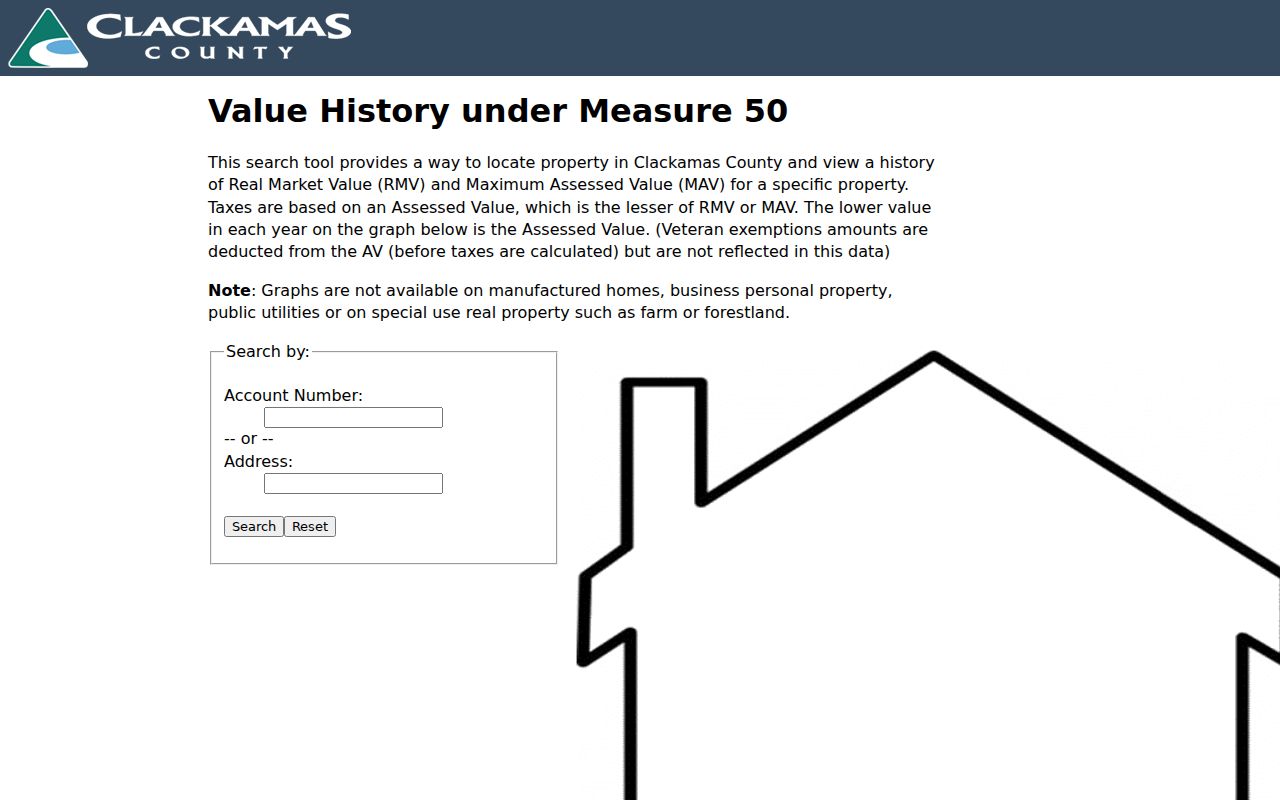
The screen leads into property context. It does not turn the tax tool into a public owner or occupant list.
What Oregon City CMap Omits
CMap is rich in parcel facts, yet it deliberately suppresses one fact many people expect to find: owner names. A selected result can show building details, year built, values, jurisdiction, voting geography, zoning, utilities, hazards, surveys, and tax maps. The county says its boundary display is not survey quality. It also says owner names and owner mailing addresses are not published in CMap.
That omission is useful guidance, not a dead end. Once the property is identified, contact Assessment & Taxation by phone, email, at the counter, or through the relevant request route to ask what owner or tax information is releasable. A mailing address can differ from the situs address, which is the property's physical location. Either one also differs from proof of occupancy.
- Parcel
- A mapped property unit used to organize assessment and land context.
- Situs address
- The physical location used for a map or permit record.
- Legal description
- The lot, block, subdivision, metes-and-bounds, or document reference used in recorded land work.
- Index
- A finding aid that points to a record; it is not necessarily the record image or certified copy.
Oregon City Deed Trails
The Clackamas County Clerk's Recording Division says property ownership can be traced in county records to the early 1850s. Its verified public route is a research and copying area with microfilm or computer images, not an inspectable open grantor-grantee web form. Bring a focused target: an address, party-name variants, an approximate date, a document clue, and, when possible, the legal description.
For a backward trail, obtain the current acquisition instrument, record its document number or book and page, date, grantor, grantee, and legal description. The prior seller becomes the next historical research target. Compare the legal description on each step. A reused house number alone can mislead when a lot was divided, a street changed, or an addition was absorbed into the city.
Clackamas Records Management's public-records information is shown below. It is the county request fallback when a known record must be routed to the right department.
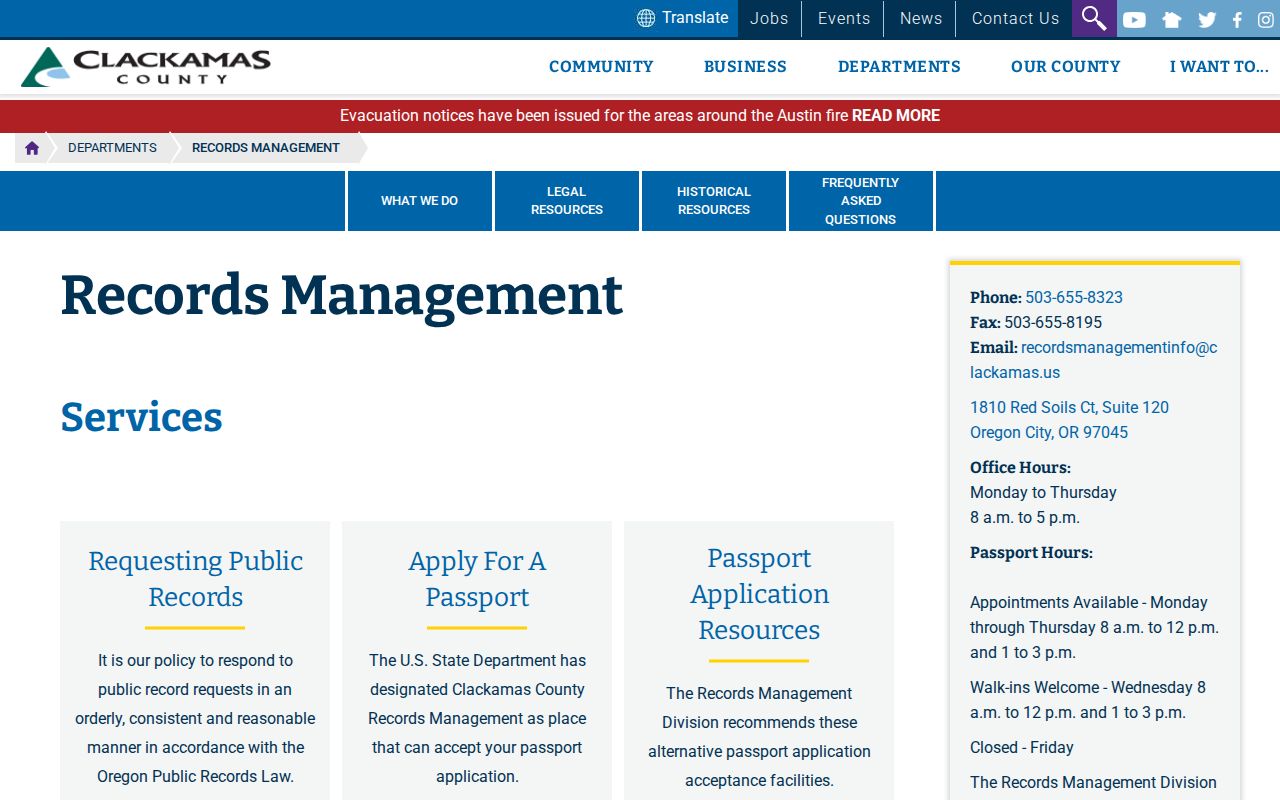
Older or difficult land work can move from the index lead to a counter search, a copy request, or a carefully scoped public-record request.
Note: A recorded deed shows a dated property interest, not a complete list of people living at the property.
Current Oregon City Resident Directories
Current Oregon City directories are really several narrow source types. CMap and the tax-history tool identify property context, but the county does not publish owner names in those public map tools. Recorded instruments list parties to a property interest, not all occupants. Oregon My Vote is a personal registration-status path rather than a public browser. The City staff directory lists public offices and contacts. Each source is useful only when its listed role matches the question.
| Source | Who It Lists | Keeper | Access |
|---|---|---|---|
| CMap and Tax History | Parcel and value context | Clackamas GIS / Assessment | Free address or account tools; no online owner names |
| Recorded instruments | Grantors, grantees, legal descriptions | Recording Division | Public research area, copies, or focused request |
| My Vote / state voter list route | A voter's own status or law-controlled list data | Oregon SOS / Elections | Personal service or state request process |
| City staff directory | City employees and departments | Oregon City | Free online contact directory |
| Neighborhood civic resources | Boundary and notice context | Oregon City associations | Not private membership directories |
Use a record's date and role to avoid an overclaim. For example, an ownership clue can lead to title research, while an estate or court clue may be better handled through the Oregon City resident lookup workflow.
Oregon City Permits Since 2002
Oregon City's Building Construction page links to a Permit Record Search that the City says can check current or open permits, status, inspections, and final or closed permits back through 2002. That creates a useful dated building-history layer after a parcel has been identified. It may name an applicant or document work, but the landing material does not make a permit result proof of a current household.
The application system changed on January 1, 2025, when the City moved from state ePermits to its Citizen Self Service portal. The city documents a registration or account process for applications and lists mechanical, electrical, plumbing, building, demolition, fire, and solar categories. The externally rendered form was not fully captured, so only the City's verified capabilities belong in a search plan.
Oregon City's public-records request page is pictured here. It explains the current City Recorder process, including inspection by appointment and the GovQA route for a record that does not appear in a self-service tool.
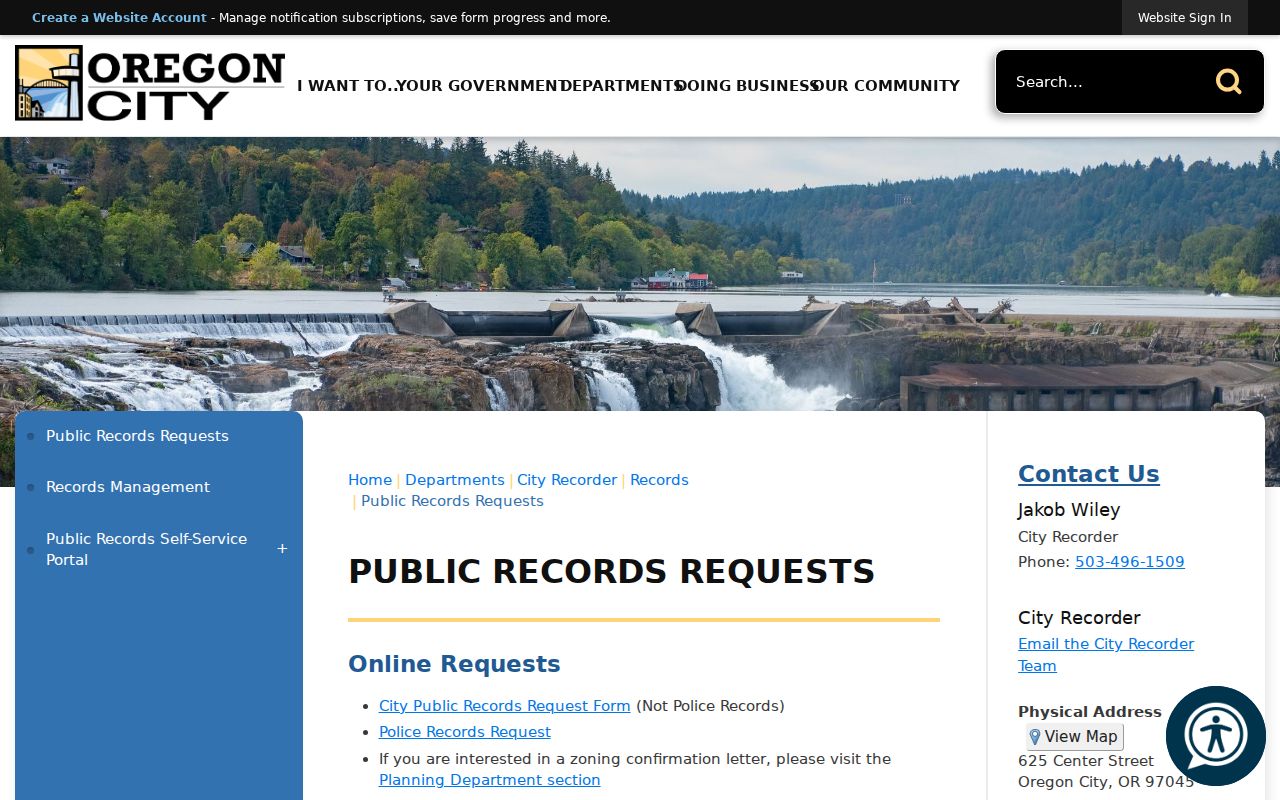
A missing permit image or archive scan can be a migration or access issue. Ask the right city office for the identified record before drawing a conclusion.
Oregon City Court Record Checks
Oregon City Municipal Court handles most city and state traffic offenses within city limits and most misdemeanors. Clackamas County Circuit Court is the broader state trial-court route for matters such as probate, family, civil, and criminal cases. The County Clerk's Recording Division is separate from the court system, a distinction the county itself makes because Oregon took over district, circuit, and probate court functions in 1983.
OJCIN Online is the state service for registered users. Its guide separates Party searches for civil, family, probate, and Tax Court matters from Defendant searches for criminal, traffic, and parking cases. A case number can lead to the Register of Actions. A nonmatch does not prove that no record exists, and sealed, juvenile, adoption, and protected material remains outside a general name search.
The OJCIN access page is shown below. It is a gateway to a court-record channel, not a current-address directory.
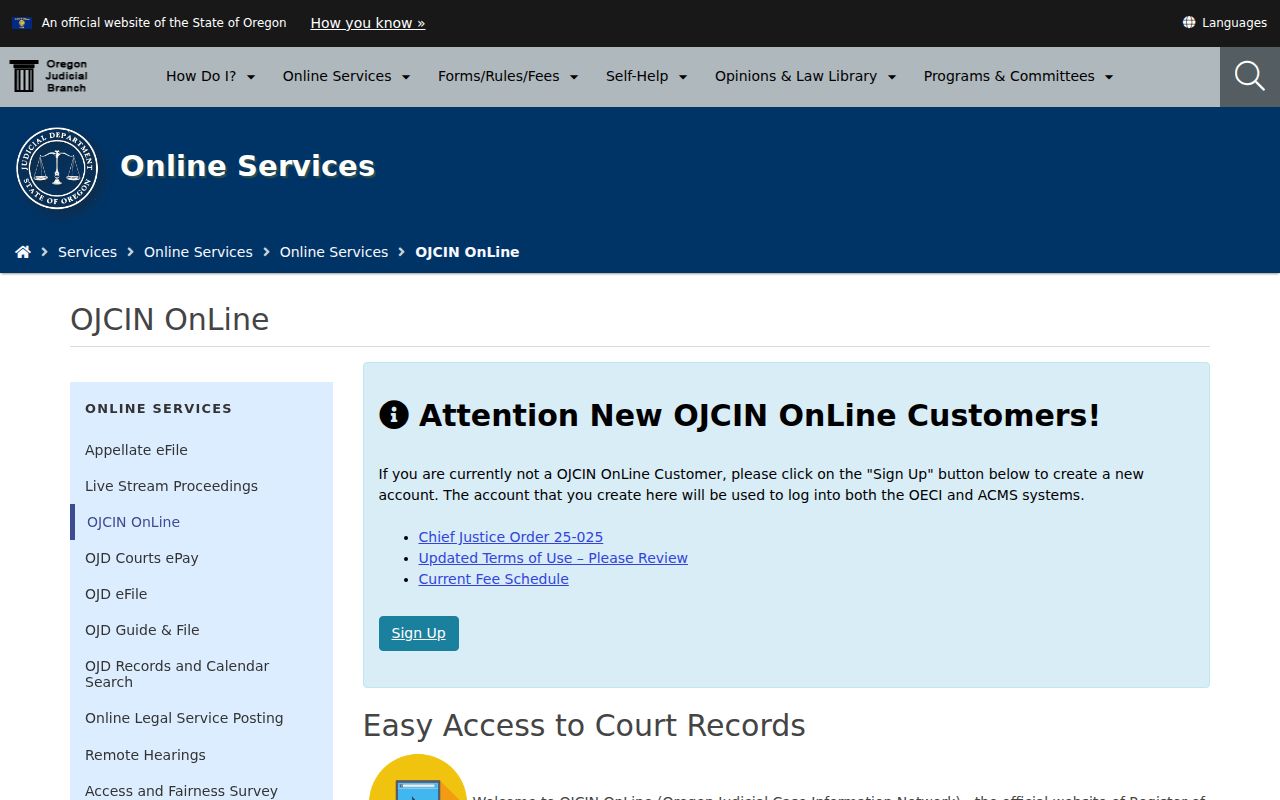
For old or restricted material, the local clerk, public terminal, copy request, and archive route may be more important than the online result.
Note: A court address or filing date can distinguish a case party, but it is not proof of present residence.
Oregon Vital Records and OHRI
The Oregon Health Authority Center for Health Statistics issues certified birth, death, marriage, domestic-partnership, divorce, and dissolution records. The State Archives and the Oregon Historical Records Index, or OHRI, are the historical route. Archives reports that birth records and index entries open after 100 years, while death and marriage or divorce returns open after 50 years. An index hit is not a certified certificate and does not remove current eligibility rules.
OHRI keeps original spellings. That matters in Oregon City research because an exact search can fail when an original source used an initial, a variant vowel, a hyphen, or a different spacing. The Archive's Clackamas inventory includes indexed deaths, marriages, divorces, estates, guardianships, naturalizations, and other older series. Keep the spelling and date from an index, then ask the keeper for the underlying record where access permits.
Oregon's vital-record ordering page is shown below. It separates certified-copy ordering from an archive or library index search.
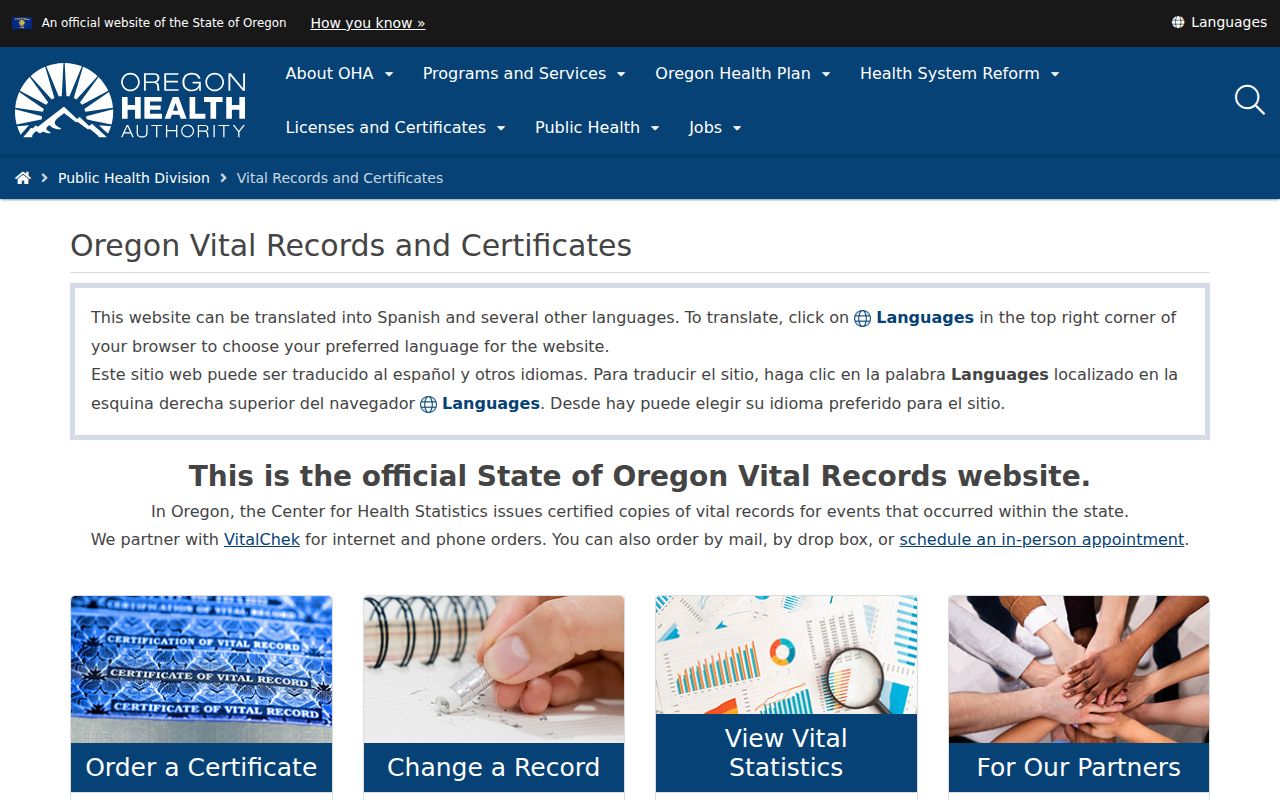
Use the live order instructions for current fees and delivery choices because eligibility and timing depend on record type.
Personal Oregon Voter Status
Oregon My Vote is an individual registration-status, ballot, and update path. It asks for identifying information, including name and date of birth, for the voter using it. It is not a public street or block browser. The safer local geographic use of CMap is its voting layer, which supplies precinct and district context for an address without publishing a named voter list.
A different state process exists for a full electronic voter-list request. The Secretary of State describes statewide and smaller-jurisdiction options, a fee schedule, delivery process, and request conditions. Allow the state's stated processing period, identify the jurisdiction and requested format, and follow all use restrictions. Protected voters and Address Confidentiality Program participants may be exempt.
The My Vote entry page is shown below. Its personal authentication model is the reason it should not be treated like a public Oregon City resident roll.
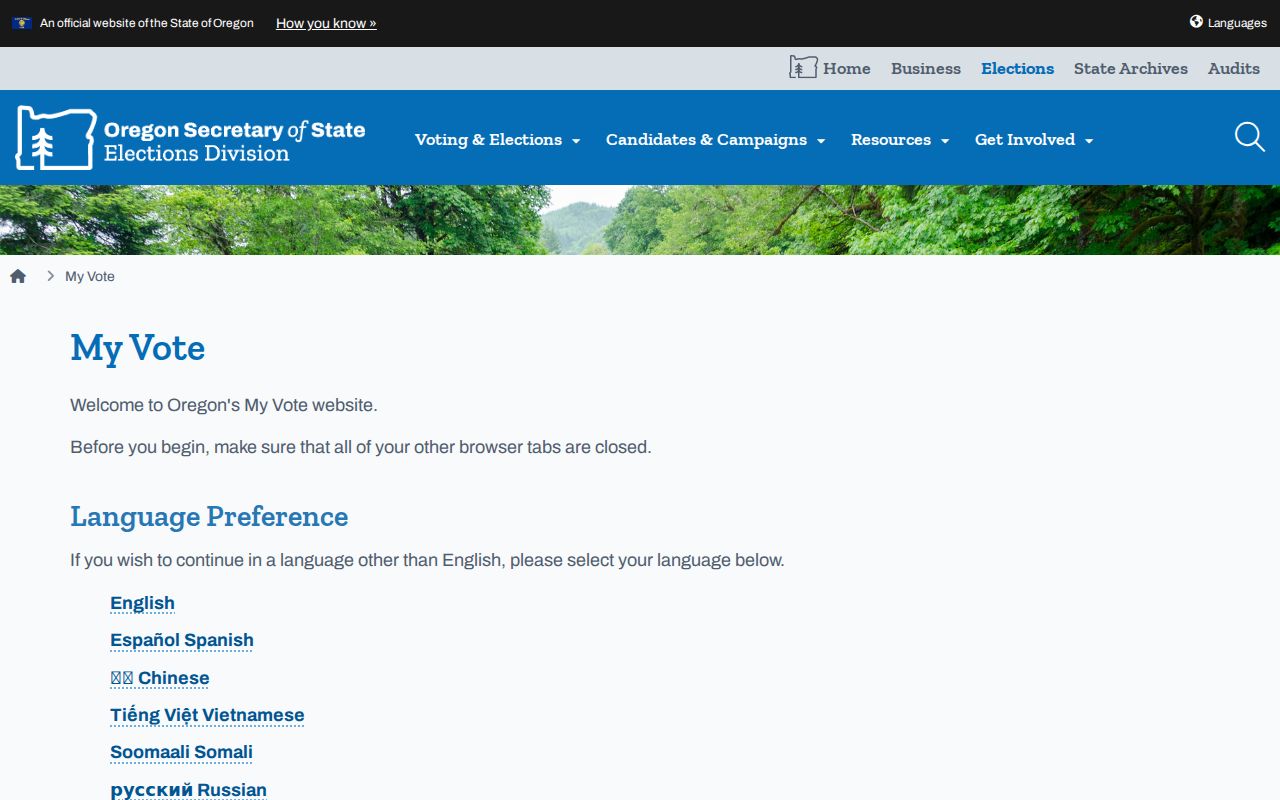
Election participation data never reveals ballot choices, and a protected address must remain protected.
Request Oregon City Records
When an identified City or County record is not online, use the public-records channel that holds it. Oregon Public Records Law, ORS 192.311–192.478, supplies the general access framework. Under ORS 192.324, a written request generally receives an acknowledgment or completion within five business days, followed by the statute's further completion or explanation framework. A request works better when it names the department, record kind, address, case or account number, date range, and whether inspection or copies are wanted.
For county material, Clackamas Records Management routes requests and may provide a time and cost estimate. For city-created records, Oregon City's GovQA Records Center is the current submission path. The city says its Recorder response can take up to five business days and offers inspection by appointment. Its legacy Self Service archive also warns that ERP migration can delay document availability.
Oregon City's GovQA Records Center is shown below. The archive's search screen is one access channel, not a test of whether an original record still exists.
A narrow request gives the custodian a practical way to locate material without turning a public-record process into a broad person search.
Oregon City Historical Name Trails
The Oregon Historical Records Index is a free state finding aid for older record groups. In Clackamas County it includes historical deaths, delayed births, divorces, estates, guardianships, marriages, naturalizations, name changes, commitments, coroner reports, widow pensions, and early probate material. It is strongest when a searcher preserves the spelling printed in the source and tests reasonable variants rather than silently merging similar names.
The State Archives description of OHRI is shown here. It explains why an index lead should be followed by the original series, microfilm, publication, or custodian rather than treated as a complete personal profile.
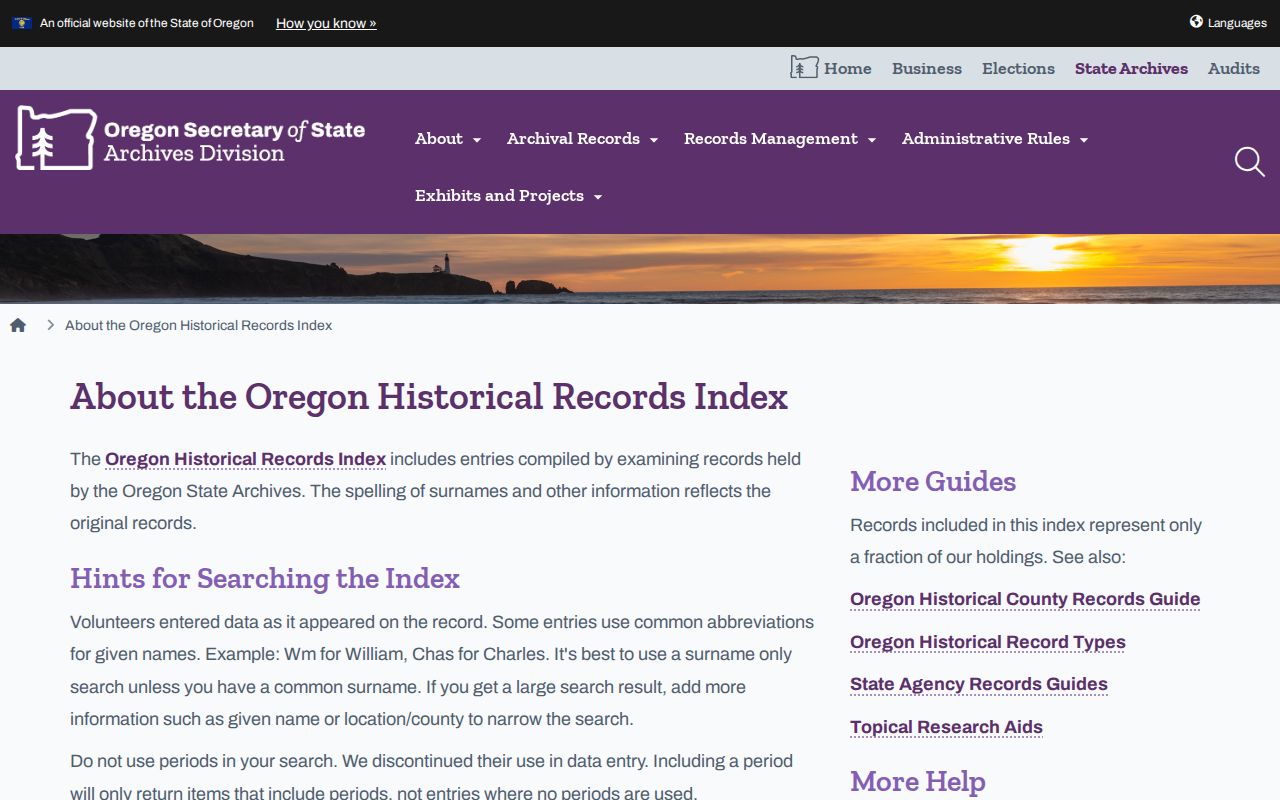
The index helps narrow a historical question to an event and record group. It does not replace the access rule for that record.
The OHRI search service is also shown below. Use initials, variant spellings, spacing, hyphenation, and an approximate year when an exact-name search fails.
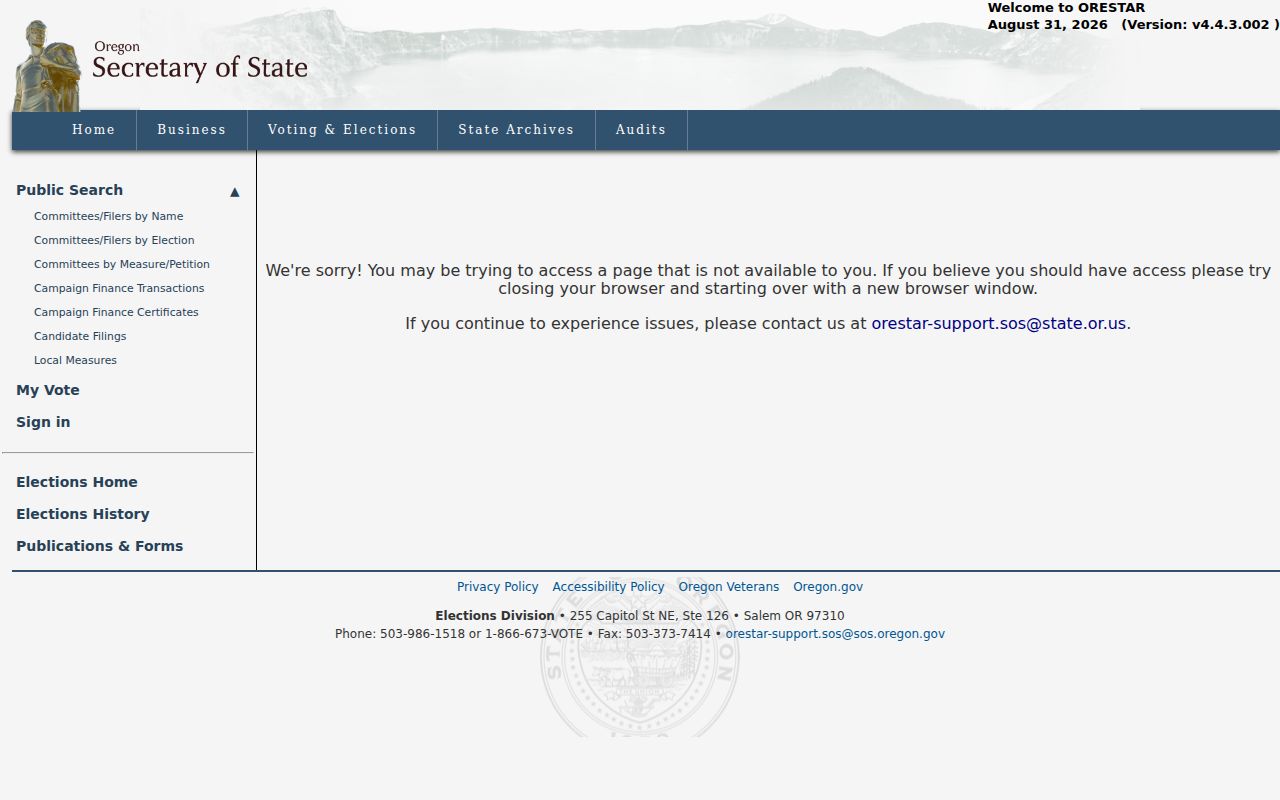
After a match, the State Archives Reference Room and research service provide non-digital paths to the record series.
Note: Historical index coverage is record-specific, so an unreturned name does not establish that no Oregon City record survives.
Oregon City Business Record Roles
The Oregon Secretary of State Business Registry can establish an entity, filing, registered-agent, or official business-address context. Oregon City business licensing provides a separate local record route. These are role records. A listed address may be a place for formal service or a business location and should not be relabeled as a private residence.
The Oregon Business Registry entry point is shown below. Record the legal name, registry number, and date before asking the issuer about a specific filing.
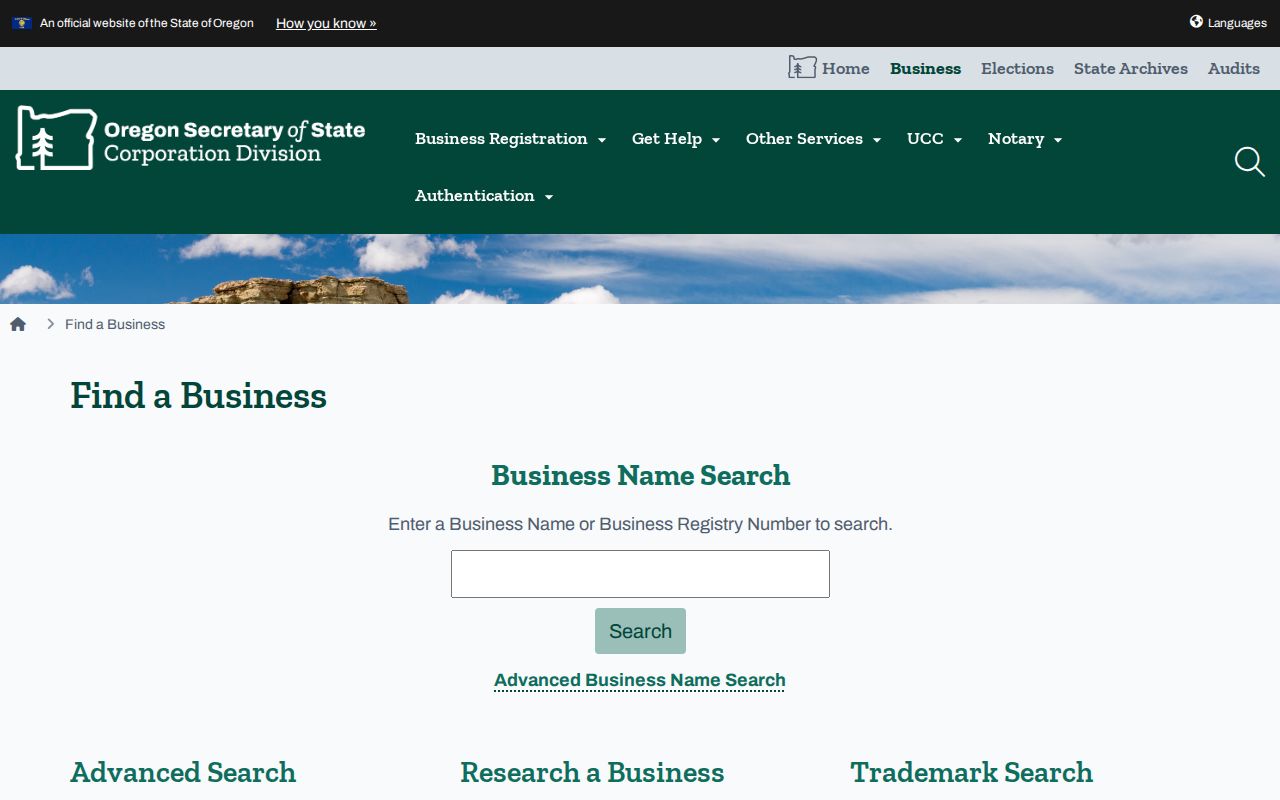
For a person-specific question, an entity filing is one independent anchor at most, never a substitute for a custodian's resident or property record.
Oregon City Library History Desk
The Oregon City Public Library is the local bridge between an address lead and historical evidence. Its reference-only Oregon Collection in the Carnegie building includes Oregon City and Clackamas materials, periodicals, reference works, and Oregon City High School yearbooks from 1910. The library also supplies newspapers, census film, marriage and divorce index aids, Sanborn maps, a microfilm scanner, Ancestry.com for Libraries, and the Oregon City Genealogy Interest Group.
For a local volume or date, ask the Reference Department for the actual holding, copying conditions, and catalog record. The nearby Wilmer Gardner Research Library adds local books, microfilm, maps, obituaries, vital and burial material, and a research-request route. That combination keeps a local historical trail tied to actual holdings rather than assumptions about an online directory run.
Oregon City's historical geography calls for care. Canemah, older additions, the lower and upper terraces, and nearby postal areas can point a record to a different series. Pair a date with a place name, a map, and an original source.
Oregon City Record Gaps
Not every blank result is a missing record. The city's archive migration can delay access to a scan. The 1849 courthouse fire is a reason to check the actual State Archives series, not a reason to assume every early file burned. The County Recording Division reports a strong early-1850s ownership trail, while State Archives holds Clackamas tax rolls, deed indexes, deeds, plats, land registers, and the 1850 Oregon City lot-purchase register for specific historical periods.
Safety limits also matter. Oregon's Address Confidentiality Program and election address-exemption procedures can protect an address. Vital records have time and eligibility limits. Court files can be sealed or otherwise unavailable. Use a defined personal, family-history, estate, civic, or safety question, and ask a custodian to correct a source record when it is wrong.
Lawful use. Oregon City records support lawful personal research and civic questions, not stalking, harassment, intimidation, or an attempt to expose protected people.
Historical Oregon City Resident Directories
Oregon City's historical directory work begins at the library shelf rather than a claimed online run. The official library sources verify reference-only Oregon Collection holdings, newspapers, census film, maps, yearbooks, and index aids. They do not verify a complete publisher sequence, a reverse-directory run, or an inspectable local entry image. One cataloged lead is an August 1932 Oregon City telephone directory; a 1936 rural-directory reference is a separate lead, not proof of a continuous city series.
A dated entry can still be powerful when copied exactly and paired with the nearest census, newspaper, OHRI event, or land record. Preserve the listing's spelling, title, year, publisher, page, and any volume-specific abbreviation key. For a street or address question, verify whether the actual volume has a street section before treating it as a reverse directory. Reference staff and the Wilmer Gardner Research Library are the practical fallback when a catalog result is not online.
Note: A historical directory is a publisher's dated listing, not proof of every household member or continuous occupancy.