
Oregon City City Directory Collections
Oregon City has a strong local-history shelf, but the available official descriptions do not verify a complete run of city directories, a publisher sequence, or a reverse-directory series. Begin at the Oregon City Public Library rather than treating a web search as an inventory. Its Oregon Collection is reference-only in the Carnegie building and holds local books, periodicals, reference works, and Oregon City High School yearbooks. Library staff and the catalog are the documented route for asking whether a specific telephone book, city directory, or local serial is present and what copying conditions apply.
| Collection | Years | Where Held | Access |
|---|---|---|---|
| Oregon Collection and yearbooks | Yearbooks from 1910; no complete directory run verified | Oregon City Public Library, Carnegie building | Reference-only; ask staff or search the catalog |
| Oregon City newspaper microfilm | 1846 to 1992 across named titles and gaps | Library Carnegie Center and University of Oregon historic newspaper collection | Microfilm, scanner, and many digitized issues |
| Telephone directory lead | August 1932 | Independently cataloged Pacific Telephone & Telegraph Co. lead | Confirm holding and copying conditions with the library |
| Rural-residents lead | 1936 | Clackamas County tax-assessor context | Lead only, not a confirmed Oregon City online directory |
| Census, marriage, and divorce microfilm | Census 1850 to 1930; local index spans vary | Oregon City Public Library | In-library research and custodian follow-up |
That gap matters. The 1932 telephone directory and the 1936 rural-residents reference are useful leads, not evidence of a continuous Oregon City city-directory run. A missing catalog result may mean a volume is absent, cataloged differently, or requires staff help. It does not justify filling in years or assigning a publisher that has not been verified.
Oregon City Directory Shelf Limits
The Oregon Collection is the first local stop for a historical name or address. It serves Oregon City, Clackamas County, and Oregon topics, and it does not circulate. Bring the fullest known form of a name, likely date range, and place label. Oregon City proper, Canemah, Park Place, a rural township, and an adjacent postal area can lead to different source sets. Ask for the exact item, not a vague request for a person search, and record the volume title and call number before copying anything.
The Oregon City Library collections page is the source behind this view of the local shelf.
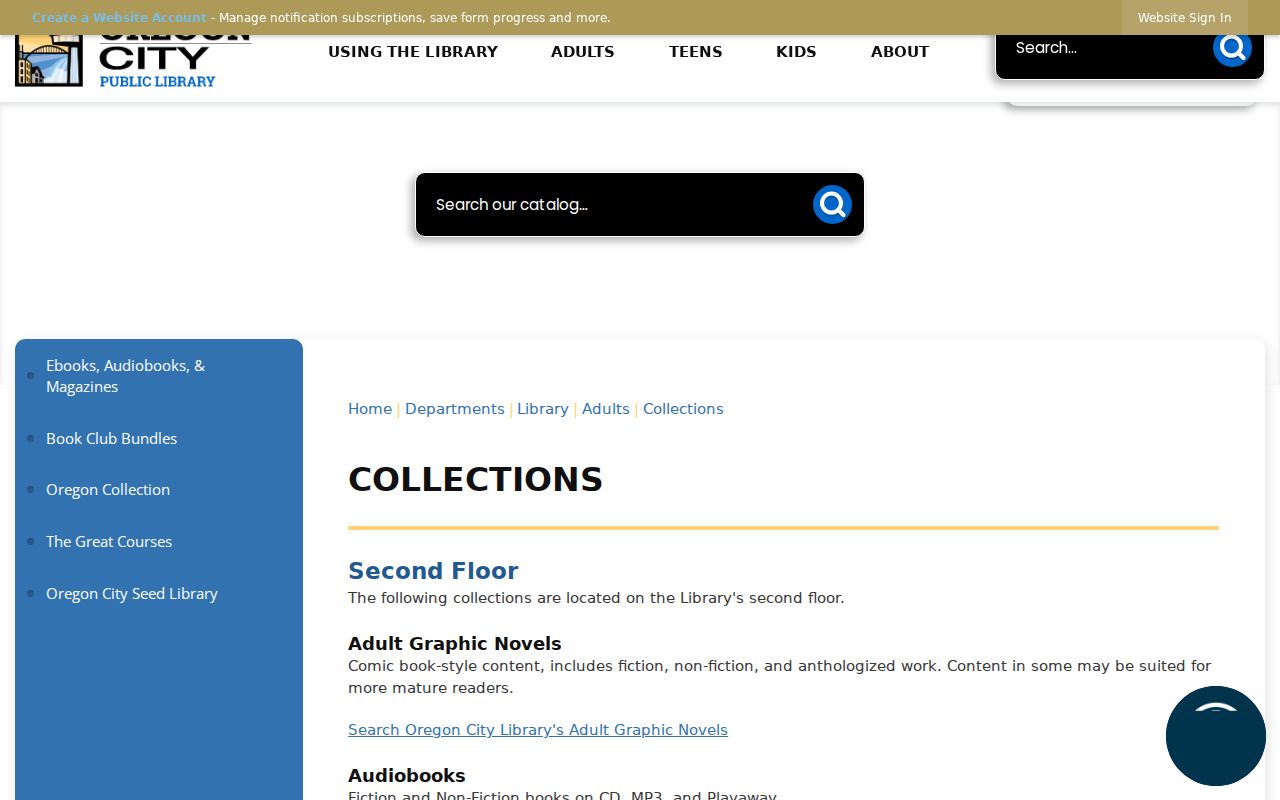
The collection supports dated local research, but it does not establish that every historical directory is digitized or even held in a complete sequence.
Reference staff can be reached through the Oregon City Public Library at 503-657-8269, extension 1017, when the question is a particular directory year or reproduction rule. This is also a sensible route when a title appears in a secondary citation but the actual volume cannot be located. Note: A dated listing is a publisher record, not automatic proof that a whole household lived at the printed address.
Oregon City Newspapers Beside Directories
When a directory year is missing, dated newspapers often give the strongest nearby evidence. The library documents a long local microfilm run: Oregon Spectator from February 15, 1846 to March 10, 1855; Oregon Argus from April 21, 1855 to January 12, 1878, with missing issues; and later Enterprise, Courier, Banner Courier, Press, and Enterprise Courier titles that reach April 8, 1992. A notice can place a family, business, marriage, death, move, or civic activity near a particular date without pretending to be a city directory.
The other verified runs are Oregon City Press, February 9, 1898 to April 26, 1899; Oregon City Enterprise, November 27, 1866 to October 17, 1868; Weekly Enterprise, November 1868 to November 3, 1871; Oregon City Enterprise Weekly, November 10, 1871 to December 25, 1942; Oregon City Courier, September 23, 1883 to July 3, 1919; Oregon City Banner Courier, July 17, 1919 to February 28, 1950; a second listed Oregon City Enterprise run, January 8, 1911 to February 28, 1950; and Oregon City Enterprise Courier, March 1, 1950 to April 8, 1992.
The library’s Microfilm Scanning System describes the historical-newspaper and reader-scanner route.
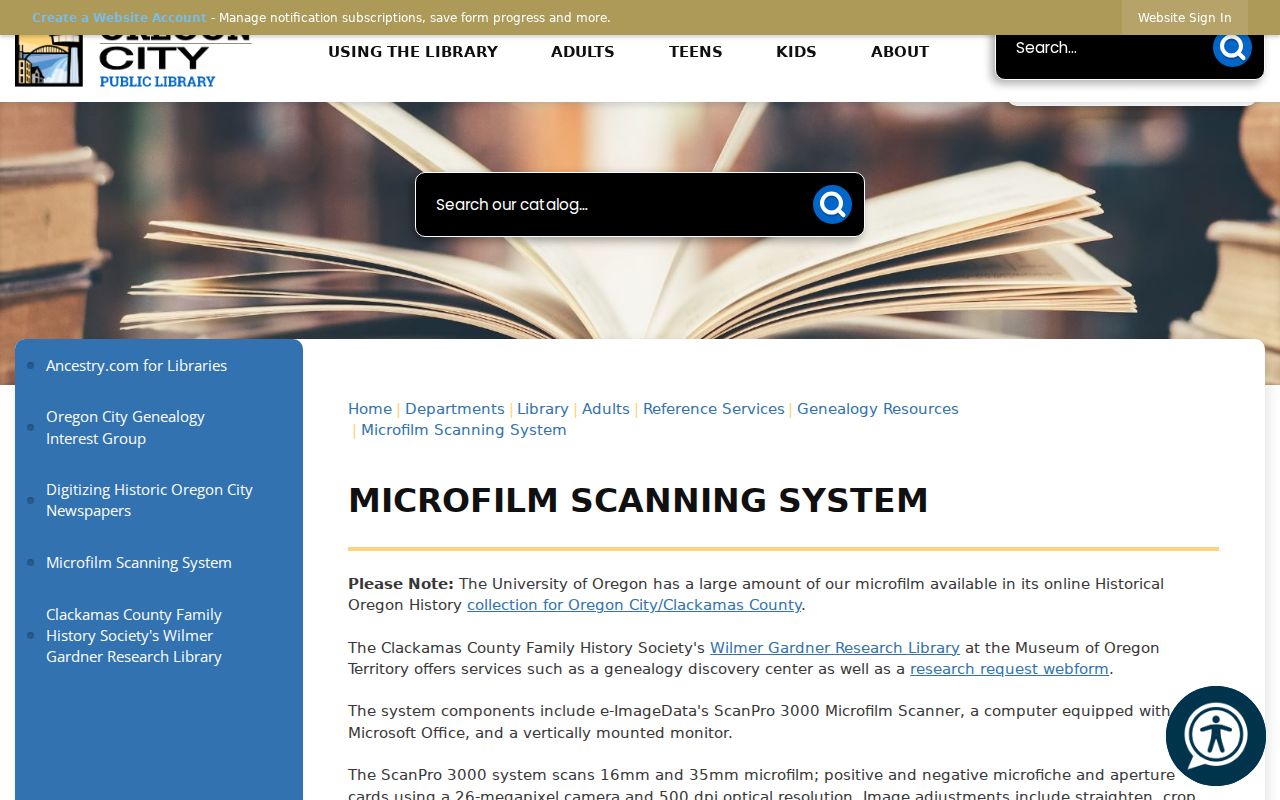
Use the newspaper issue closest to the event, then transcribe the title and date with the name. The University of Oregon Historic Oregon Newspapers collection places much of the library’s microfilm online, while the Carnegie Center remains the fallback for material that needs a reader or scanner.
The 1846 to 1992 span is an interest point, not a claim that every issue names every resident. It is most useful for testing a directory entry, identifying a move between census years, or finding an obituary and then pursuing the original custodian record.
Oregon City Microfilm Directory Research
The Carnegie Center reader/scanner handles 16 mm and 35 mm microfilm, positive and negative microfiche, and aperture cards. The library reports a 26-megapixel camera and 500 dpi optical resolution, along with crop, zoom, contrast, printing, and USB saving tools. That makes it practical to preserve an exact clipped notice or a directory page when a volume is available. Photograph or save the title page and any abbreviation key with the entry, since those details explain what the listing actually represents.
The library’s Genealogy Resources page documents in-library Ancestry.com access, public Wi-Fi access, the Oregon City Genealogy Interest Group, Early Oregon Voices, and the local scanner route.
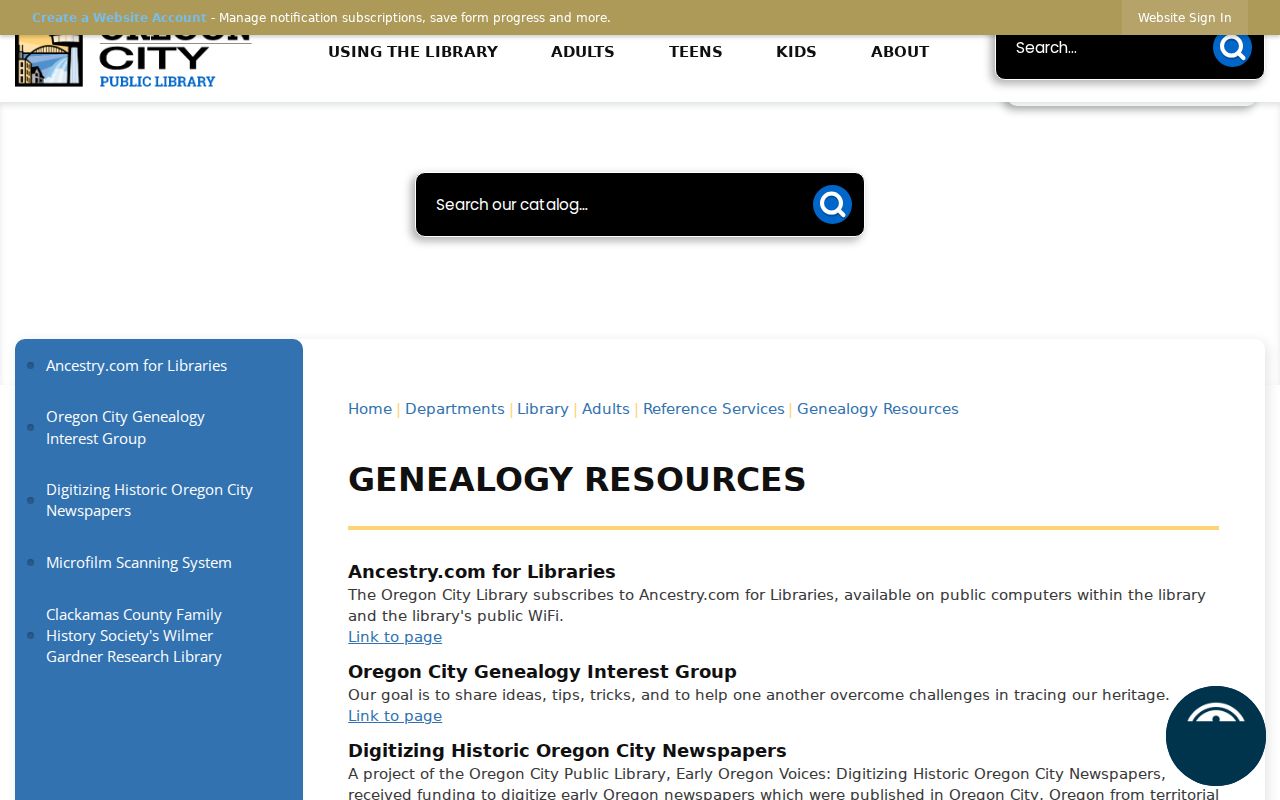
These tools help match names to dated material. They do not turn an unverified directory lead into a current address claim, and they should not replace the library catalog or staff confirmation of a particular volume.
Note: Save the title page and abbreviation key with each clipped image so the entry can be checked later.
Read an Oregon City City Directory Entry
No official Oregon City directory page or local abbreviation key was available for inspection, so the safest reading method starts with the volume in hand. Transcribe the surname, given name or initials, spelling, printed street number, street name, unit, town label, occupation or organization, spouse, decedent, widow, telephone, and any employer or business detail only if that volume prints it. Capture the directory title, publisher, year, page or column, call number, and reproduction restriction too. The title and page are what make another researcher able to check the claim.
| Name and spelling | Copy the exact surname, given name, initials, and punctuation before normalizing variants. |
|---|---|
| Household clue | Record any printed spouse, decedent, widow, or relationship notation without expanding an abbreviation from memory. |
| Address line | Keep the house number, street, unit, and town label exactly as the volume prints them. |
| Role or contact detail | Note occupation, business, organization, employer, or telephone only when printed in that entry. |
| Source citation | Save title, publisher, year, page or column, call number, and any use restriction. |
- Criss-cross directory
- A volume’s street-order section, if it has one, that can connect an address to listings. No Oregon City run has been verified here.
- Householder index
- An index organized around the listed household or address rather than a complete census of occupants.
- Abbreviation key
- The volume’s own explanation of marks such as r or h. Read it before assigning meaning to a status mark.
A listing is a dated publisher assertion. It may omit people, trail a move, use a spelling variant, or describe a business contact rather than a residence. That distinction protects a family-history trail from growing beyond the source.
Oregon City Directory Yearbooks
Oregon City High School yearbooks in the Oregon Collection date back to 1910. They offer a focused former-classmate and family-history route when a person is connected to the school, but they are not a citywide resident roll. Preserve the year, grade or activity context, and the page reference. A yearbook photograph, club list, or class notation can supply a spelling and time marker that is then checked against a newspaper, census, or another original record.
The reference-only Oregon Collection is the documented source for these yearbooks.
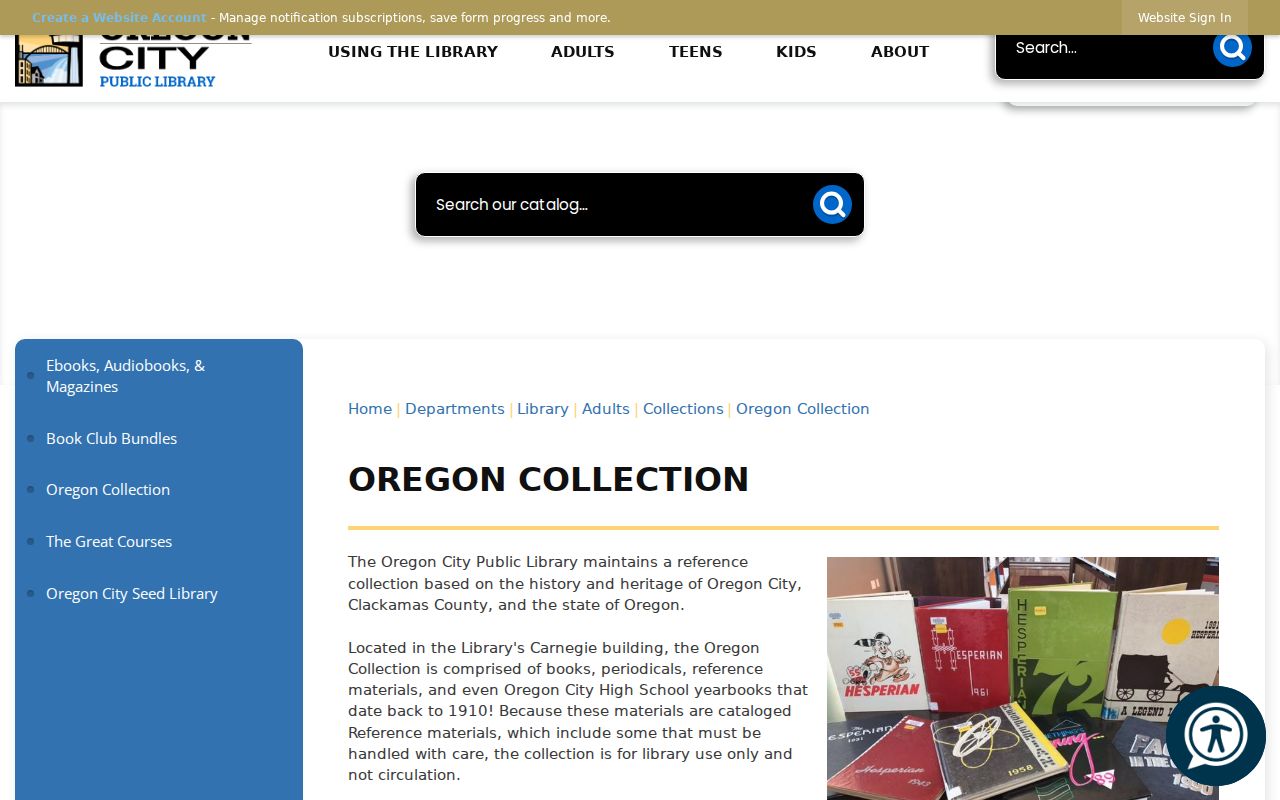
The same shelf can provide local books and periodicals that explain a school, neighborhood, or place name around the dated entry. It remains important to distinguish a school connection from an assertion about a person’s later residence.
Note: A school reference supplies historical context but does not establish a person’s current household or mailing address.
Oregon City Directory Family-History Routes
The Clackamas County Family History Society’s Wilmer Gardner Research Library, at the Museum of the Oregon Territory, is another Oregon City route when a library catalog lead needs deeper local context. The research library holds books, microfilm and maps, Donation Land Claim material, biographical sources, unindexed vital and burial material, county-hospital records, obituary clippings, histories, and vertical files. It also accepts research requests. Those holdings can help test a name that appears in a yearbook, old telephone lead, newspaper notice, or directory entry.
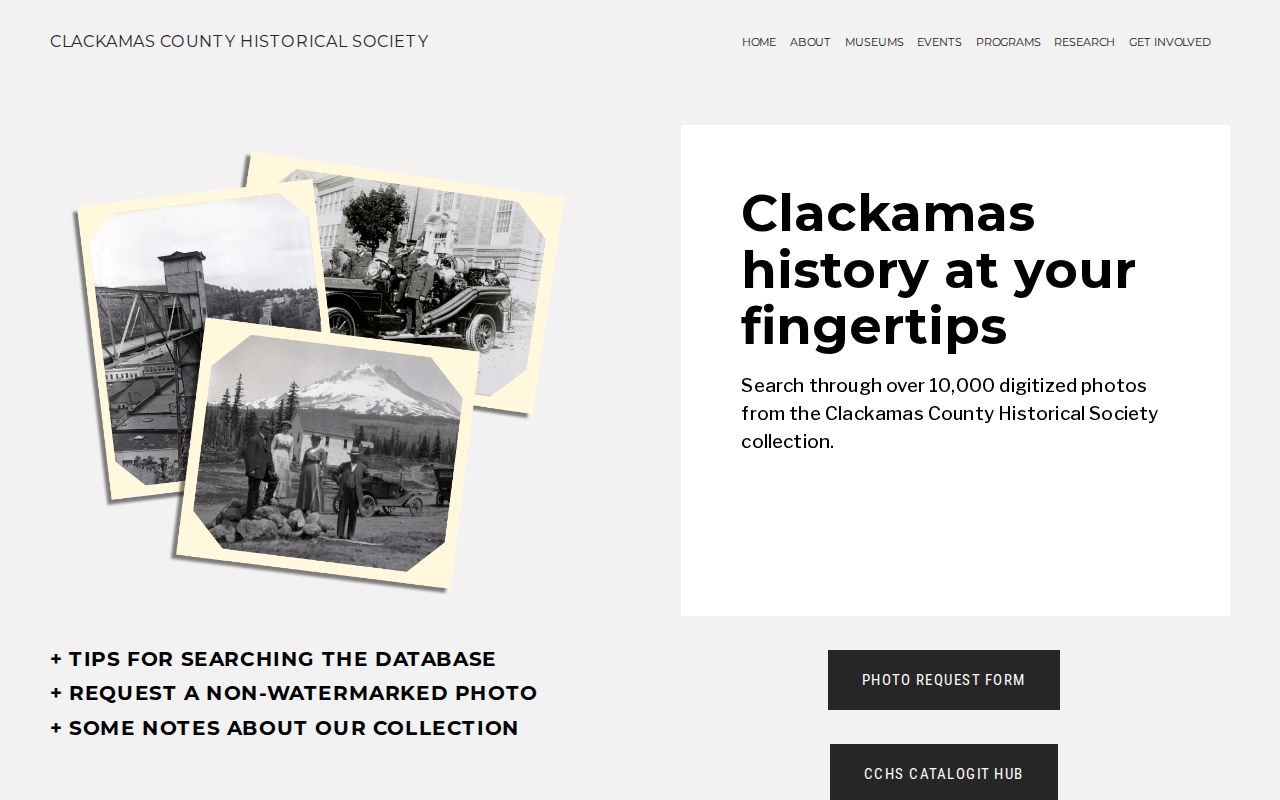
The Clackamas County Historical Society digital collection is a companion source with more than 10,000 images. It supports quoted phrase searches, a + required-term search, and * wildcards. Historic descriptions and spellings can be wrong, so retain the original item citation and check the underlying source when possible.
The historical society collection is the source for the digital-search view.
These sources make a person-specific trail more documented, not more certain by default. A useful match carries its date, place, record role, and citation forward into the next search.
Oregon City Historical Directory Context
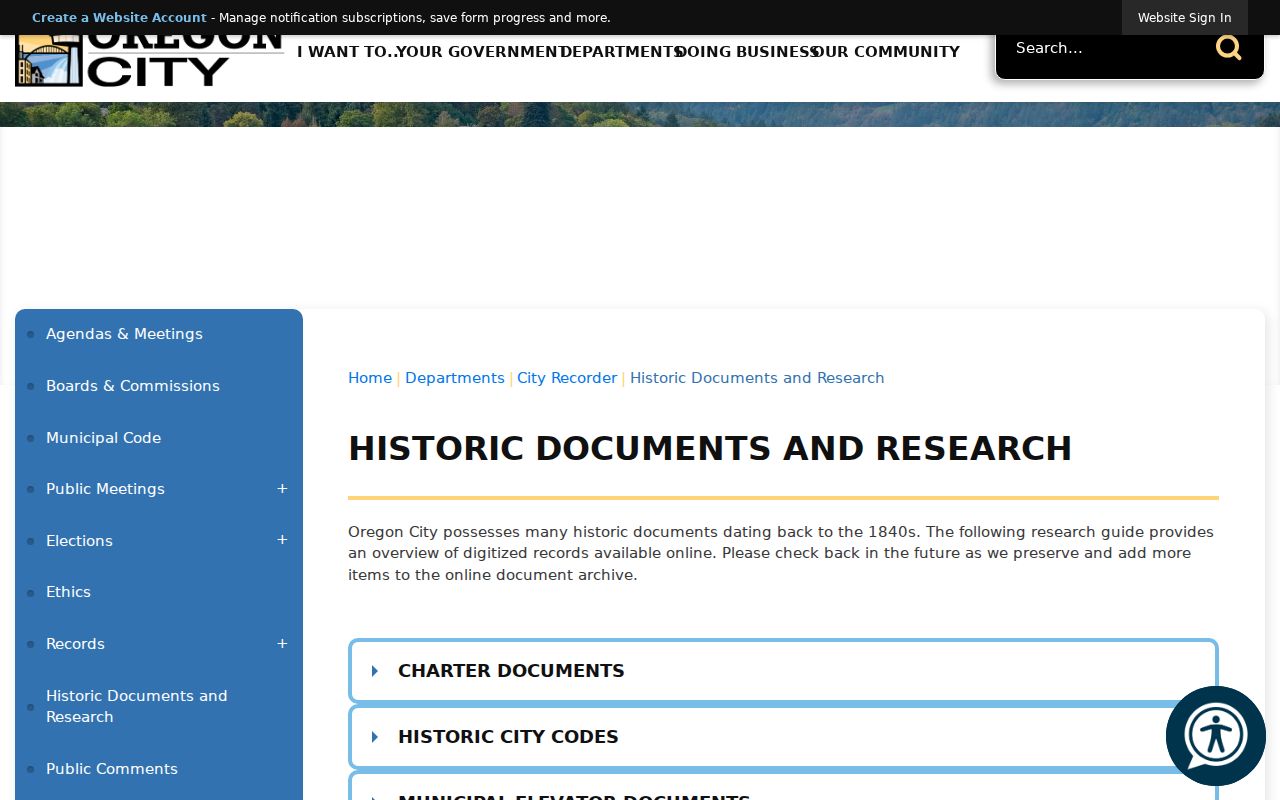
City records can explain the place around a name even where no directory volume has been verified. Oregon City’s Historic Documents and Research archive offers digitized material reaching back to the 1840s, including incorporation and charter sources, petitions and oaths, municipal activity reports from 1925 to 1938, a bond register, 1914 to 1917 water-rent books, Mountain View material, and 1950s projects. Use a title-word search with a wildcard when searching the legacy archive guidance, rather than relying on Date Created or Record Number as a first step.
The city’s Historic Documents and Research archive is the source for this municipal material.
Municipal reports and water-rent books can provide street, service, and local-government context. They should be cited as their own record type, not misdescribed as a city directory or treated as proof of who occupied a site.
Note: Search the precise municipal record category before using a street reference as evidence about a named person.
Trace Households Through Oregon City Directories
Start with the correctly dated place and the exact text from a verified volume. Search the next and previous available local source, even if it is a newspaper or telephone lead rather than another directory. Keep a short notebook with the source date, the printed spelling, the address, and the record role. A move, marriage notice, obituary, or estate reference becomes meaningful only when it lines up with independent evidence.
- Locate the earliest available dated entry, yearbook reference, newspaper mention, or telephone lead for the person and place.
- Copy the wording exactly, including the place label, street form, and any spouse or status notation.
- Check the closest earlier and later available local source for the same name and reasonable spelling variants.
- Pair the trail with the nearest released federal census. Individual federal census releases follow the 72-year rule.
- Use an Oregon Historical Records Index event, probate, naturalization, obituary, cemetery reference, or original custodian record to test the transition.
If a volume contains a street or reverse section, it can be an address-to-listing bridge. If no such volume is verified, use property tax maps, recorder legal descriptions, city proceedings, and dated newspaper mentions instead. For a modern confirmation after a historical finding, use the limited records in the Oregon City resident lookup rather than treating an old listing as current.
Oregon City Census and Directory Years
The library holds federal Population Census microfilm for Oregon from 1850 to 1930, along with marriage and divorce index aids. Its Marriage Index runs 1906 to 2006 but has no index before 1906 or for 1925 to 1945. Its Divorce Index runs 1946 to 2006 and also reports no records for 1925 to 1945. These are search aids, not certificates and not proof that a certificate is open for copying.
For an old life event, the State Archives and Oregon Historical Records Index can identify a series and date. Then use the proper custodian for the actual record. A disappearance from a local listing can reflect a move, death, a changed spelling, a gap in the collection, or a decision not to list. It needs corroboration, not a conclusion.
Note: Cataloged directory gaps are evidence limits, so record what was actually searched before drawing a household timeline.